


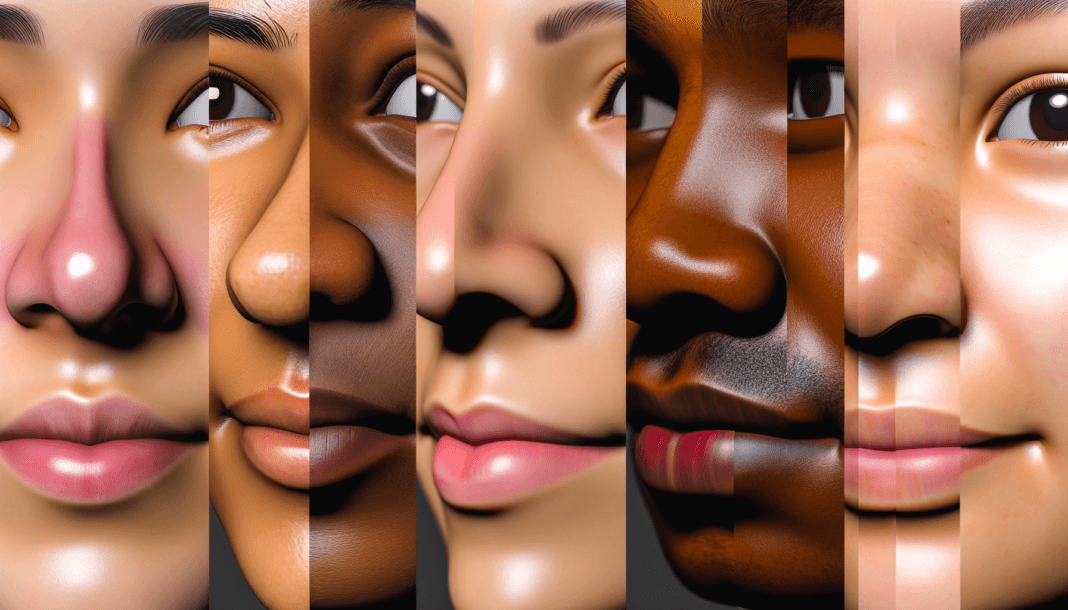

Nose types are as varied as the individuals they belong to. They’re one of our most distinctive features, and can offer some fascinating insights into our ancestry, personality, and even health. In this comprehensive guide, we’ll delve into the different nose types, what they suggest about our genetic heritage, and how they can impact our quality of life.
The Science Behind Nose Types
The human nose is a complex and fascinating organ. It’s responsible for breathing, smelling, and even contributes to our sense of taste. Scientists have identified 14 primary nose types, although there are countless variations.
Nose types are largely determined by genetics and ethnicity, but can also be influenced by factors such as aging and injury. They’re primarily categorized by their size, shape, and the angle of the nasal bridge and tip.
The Anatomy of the Nose
Before we dive into the specifics of different nose types, let’s first understand the basic anatomy of the nose. The nose is divided into three sections: the external nose, the nasal cavity, and the paranasal sinuses.
- The external nose is the part we see. It’s made up of bone at the bridge and cartilage for the rest.
- The nasal cavity is the interior of the nose. It’s divided by the septum and lined with mucous membranes.
- The paranasal sinuses are air-filled spaces surrounding the nasal cavity.
Common Nose Types and Their Origins
Nose types can tell a lot about where our ancestors came from. Let’s explore some of the most common nose shapes and their origins.
The Nubian Nose
The Nubian nose is often associated with African ancestry. It’s characterized by a wide base, long nasal bridge, and wide nostrils.
The Roman Nose
The Roman nose, also known as the aquiline nose, is common among those of European descent. It’s distinguished by a prominent bridge, which often has a slight bend or curve, giving it an eagle-like appearance.
The Snub Nose
The snub nose, also known as the button nose, is small with a slightly upturned tip. It’s one of the most common nose types in East Asian populations.
The Greek Nose
The Greek nose is straight and narrow, with a long, flat bridge. It’s named after the classical Greek sculptures, which often depicted this nose type.
The Hawk Nose
The hawk nose, also known as the beak nose, is distinguished by its sharp, pointed tip and pronounced curve. It’s common in Middle Eastern and Mediterranean populations.
| Nose Type | Description | Common Ethnic Origins |
| —————– | ————————- | ———————– |
| Nubian | Wide base, long bridge | African |
| Roman/Aquiline | Prominent curved bridge | European |
| Snub/Button | Small, upturned tip | East Asian |
| Greek | Straight, flat bridge | Greek |
| Hawk/Beak | Sharp, curved | Middle Eastern, Mediterranean |
Nose Types and Personal Health
Did you know that nose types can also have implications for personal health? For instance, those with a narrow nose and tight nostrils may be more prone to sinus infections, while a deviated septum can cause breathing difficulties.
The Influence of Nose Types on Personality and Attractiveness
Nose types have often been linked to personality traits and attractiveness. While these theories are largely based on subjective perceptions and cultural standards, they can still be fun to explore. For instance, a person with a Greek nose is often perceived as smart and practical, while a Roman nose is associated with strong leadership.
Changing Your Nose Type
If you’re unhappy with your nose type, there’s always the option of rhinoplasty. This surgical procedure can change the size, shape, and proportion of your nose to better suit your face.
Conclusion
Nose types are a fascinating aspect of human diversity. They tell stories of our heritage, influence our health, and even impact how others perceive us. Whether you’re curious about your own nose type or simply fascinated by the diversity of human features, we hope this guide has been informative and engaging.
FAQs
1. What determines nose type?
Nose types are primarily determined by genetics and ethnicity.
2. Can your nose type change over time?
Yes, factors such as aging and injury can alter the shape of your nose.
3. Can nose types affect health?
Yes, certain nose types can predispose individuals to conditions like sinus infections or breathing difficulties.
4. Are certain nose types associated with specific personality traits?
While some theories suggest this, they are largely based on subjective perceptions and cultural standards.
5. Can you change your nose type?
Yes, through a surgical procedure known as rhinoplasty.
For more on facial features, check out our posts on eye shapes and lip types.